Just brought a puppy home and not sure where to begin? The answer to how to train a puppy is short, reward-based lessons, which the AKC says can start as early as 8 weeks, as soon as the puppy arrives.
- Reward what you want. Praise, treats or toys teach a puppy what to do without making training frightening.
- Keep lessons short and easy. Start in a quiet room, finish on something the puppy already knows, and leave room for play.
- Build the routine around daily life. Meals, potty trips, play, naps and training all work better on a predictable schedule.
- Introduce the world gently and early. The socialization window is limited, so plan outings and handling practice from the first week.
The rest of this guide is organized by what you need first, with routes for the first days, socialization, leash walking, crate and alone time, and housetraining. A timeline table and a short section on choosing and naming a dog follow.
Pick your starting route
Most new owners arrive with one pressing problem, and the best starting point depends on which one it is. Follow the route that matches your situation, then come back to the others as your puppy grows.
- The puppy came home today. Start with the first-days section on reward-based lessons, then move straight to socialization, because that window closes sooner than most owners expect.
- Walks are a tug-of-war. Go to the leash section. Leash skills depend on gear introduced early and on practice in calm places before busy ones.
- The puppy cries when alone or you are leaving for work. Read the crate and alone-time section, and then the housetraining section if accidents are part of the picture.
- You want to know what to expect and when. The timeline table later in the guide compares each skill on common criteria.
- You are still choosing or naming your dog. The last section points to breed, name and budget guides.
If you read only one section, read the first one. Every other skill is built on the same method.
The first days: how to start training a new puppy
You start training a new puppy by teaching the first lessons the day the puppy arrives, using rewards, short sessions and a calm setting. The puppy does not need to settle in for weeks first. The AKC notes that positive-reinforcement training can start as soon as a puppy comes home, as early as eight weeks, and Chewy’s training guide agrees that pups as young as 8 weeks old can learn the basics.
Use rewards, not punishment
Reward-based training is the standard to follow. VCA Animal Hospitals describe teaching puppies what to do through praise and rewards as the best practice, and the RSPCA states that all training should be reward based. That matters for a first-time owner because the instinct after a chewed shoe or an accident is to scold. The VCA guidance warns that punishing unwanted behavior can lead to problems such as avoidance, fear and confusion, which are the opposite of what a young puppy needs to learn. The practical alternative is to manage the environment so the puppy has fewer chances to get it wrong, and to reward the choices you want.
Teach new behaviors with a lure, then fade it
A lure is a treat or toy that guides the puppy into position, and it is the quickest way to show a brand-new behavior. VCA says luring is useful for teaching new behaviors the first few times. After those early repetitions, shift to rewarding the behavior itself so the puppy is following a cue, not chasing a treat in your hand. If the puppy only responds when it can see food, you have stayed at the luring stage too long.
Keep lessons short, quiet and finished on a win
Puppy lessons work best when they are brief and cheerful. Chewy’s guidance is that puppy training lessons should be short, fun and supplemented with many opportunities for play, and the RSPCA advises breaking training into short but regular sessions so the dog is not overwhelmed. The RSPCA also recommends starting lessons for anything new in a quiet room in your house, away from distractions, and ending a session on a behavior the dog already knows. In practice, that means the kitchen or living room with the television off comes before the garden, and the garden comes before the street.
Sit before meals and a predictable day
The simplest impulse-control habit is a sit before dinner. The AKC says that at a minimum, families should get puppies into the habit of sitting before mealtime. It costs nothing extra, it happens several times a day, and it teaches the puppy that polite behavior makes good things arrive. Chewy’s guidance adds that dogs thrive when they know what happens next, and suggests a daily schedule built from meals, potty trips, play, training, naps and a wind-down period. If you are still working out portion sizes, our guide to How Much To Feed a Puppy: The Practical Guide to Portions, Schedules, and Growth (2026) – Missyplicity goes deeper on feeding, and the First-Time Dog Owner Checklist: 10 Essentials To Prepare Before Bringing Your Dog Home (2026) – Missyplicity covers what to have in the house before arrival.
Socialization and vet-visit practice
Socialization is the part of puppy training with a deadline, so it should be planned in the first weeks. The AKC describes a critical socialization period that ends by 16 weeks, when puppies are students of life. A certified trainer’s guide from Koinonia puts the end of the best socialization opportunity between 12 and 16 weeks of age. The two ranges overlap in the same place: the earlier end is the safer one to plan around.
What good socialization looks like
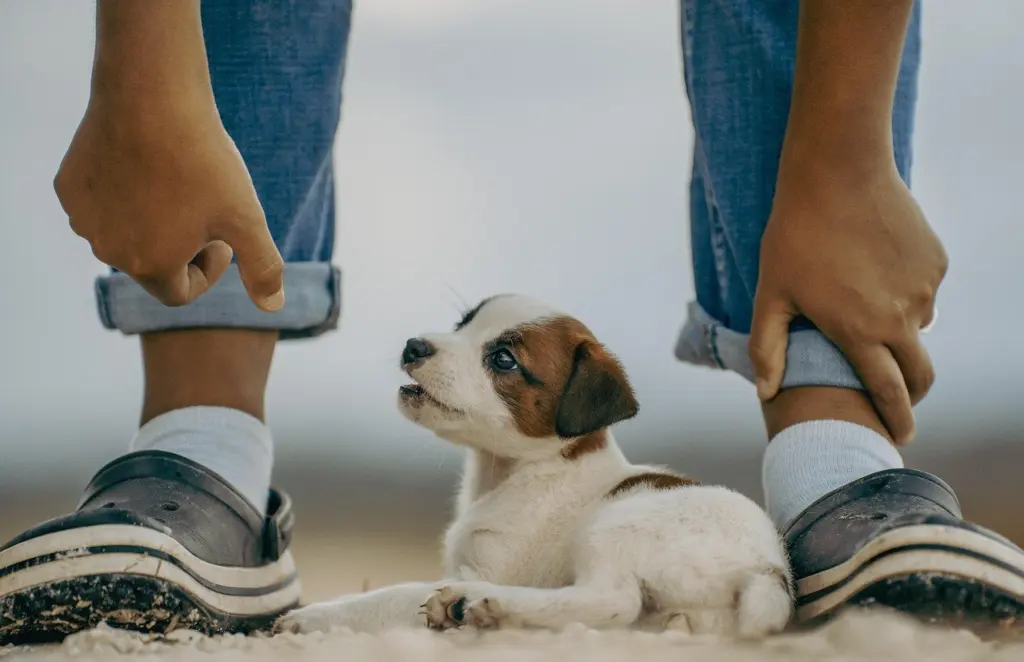
The AKC frames the goal as teaching a puppy that the world is a fun, not scary, place. Its examples include traffic, public transport, car rides, new people, other dogs and veterinary visits. The word that matters is fun. A puppy that is flooded with a noisy, crowded experience can learn the opposite of what you intended, so give each new experience at a distance and a pace the puppy can handle, and pair it with rewards. Several brief positive encounters are worth more than one long overwhelming outing.
Socializing before vaccines are finished
This is the question that worries many new owners. Koinonia’s trainers state that socialization should happen before puppy vaccines are complete, which means waiting until the full series is done would cost you much of the window. Because your puppy’s protection against disease depends on where it goes, ask your veterinarian which places and which other dogs are suitable while the vaccine series is in progress. Carrying a puppy through a new setting, hosting calm visitors and doing car rides are ways of widening a puppy’s experience while you take that advice.
Handling practice for the veterinarian and groomer
Chewy’s guidance points out that you will perform a variety of caretaking procedures on your dog throughout its life, so it pays to practice handling ears, mouth, paws and tail while the dog is young. Touch each area briefly, reward calm acceptance, and build up gradually. A puppy that is used to being handled is easier to examine, which makes the first vet visits less stressful for everyone. The same handling skills make baths and grooming easier, and our guide on How Often Should You Bathe Your Dog? A Practical Guide To Timing, Tips, And Health (2026) – Missyplicity covers that side of care.
Leash training: how to stop your dog pulling
To stop a dog pulling on the leash, aim for a gentle curve in the leash and reward the dog for staying in that position, instead of correcting it after it has already pulled. Chewy’s training guide describes that curve as the goal at all times, and says a puppy at 3–4 months shouldn’t be allowed to pull while on leash. The point is that pulling is easier to prevent in a young puppy than to undo in a strong adult dog.
Start with the gear, indoors
Before you walk anywhere, get the puppy comfortable with its equipment. Koinonia advises gently exposing a puppy to its collar, harness and leash sooner rather than later. A puppy that has already learned that the harness means nothing worse than a treat will be easier to work with outside. Choose gear that fits properly, put it on for brief moments at home, and pair it with rewards.
Build loose-leash walking in layers
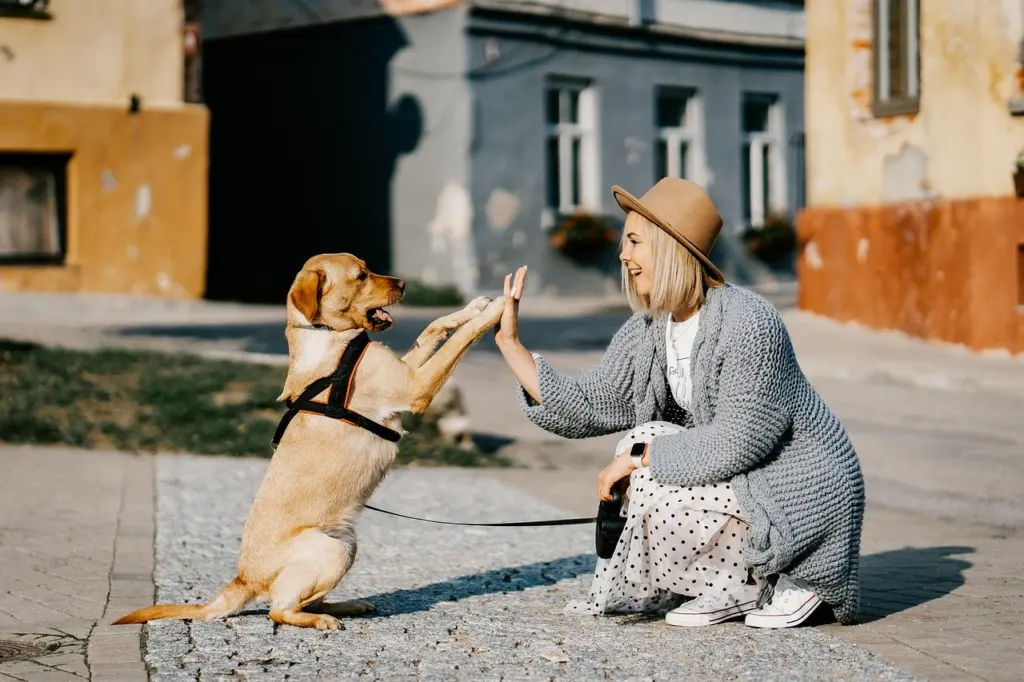
Loose-leash walking is on the AKC’s list of basic skills that should keep developing throughout the first year, alongside sit, down, stay, come, drop it and leave it. That is a useful reality check: a puppy will not walk perfectly in a week. The RSPCA’s advice to start new lessons in a quiet room applies here too. Practice the position you want inside the house, then in the yard, and only then on a quiet street. Reward the dog whenever the leash has its gentle curve, keep sessions brief, and head home before the puppy is too tired or excited to concentrate. If a walk begins to turn into pulling, return to an easier setting instead of persisting where the puppy cannot succeed.
Pair walking with safe outings
Once your puppy walks comfortably, the leash becomes the tool for the socialization outings described above. If you plan to take the dog to shared off-leash spaces later, read Dog Park Etiquette: The Complete Guide To Safe, Polite Play In 2026 – Missyplicity before the first visit.
Crate training and time alone
Crate training takes as long as the individual puppy needs, and there is no fixed number of days to promise. The goal described by the AKC is a puppy that can stand being left alone for short periods of time, in a crate or other enclosed space, and Koinonia’s trainers stress teaching relaxation in the crate at the puppy’s own pace. Quiet crating, they say, makes life easier and your puppy more successful.
Let the puppy set the pace
The practical meaning of a puppy’s own pace is that a puppy who is comfortable with the crate with the door open can be asked to do a little more, while a puppy who protests needs a smaller step. Do not treat a crate as a place for punishment. Keep it associated with calm and with rewards, which is consistent with the reward-based methods above. The full method is in our guide on how to crate train a puppy.
How long can a young puppy be left?
Chewy’s guidance says to practice brief departures, and that these should be no more than 3-4 hours for puppies 6 months or younger. Treat that as a ceiling, not a target. Start with much shorter absences and build up, because a puppy that has had no practice will find even a short absence difficult. If you work outside the home, plan midday cover for your puppy instead of stretching it to that limit.
When crying is more than normal protest
Some puppies struggle with being alone more than others, and persistent distress deserves a plan instead of a longer wait. Our article on dog separation anxiety training covers the signs and how to help. If your puppy seems distressed in ways that are not improving, talk with your veterinarian, who can rule out other causes and refer you to a qualified trainer.
Housetraining, chewing and biting
Housetraining takes several months, and the AKC says that progress depends on consistency, routine and the individual puppy’s development. That is the realistic expectation to hold: accidents in the early weeks are part of the process, not a sign that the method is failing. The routine you set up for meals and potty trips does most of the work, so it is worth repeating each day exactly the same way. For a step-by-step method, use Potty Training Puppy Tips: A Simple 7-Step Plan To Success In 2026 – Missyplicity.
Chewing and mouthing
Puppies explore with their mouths, so the most useful response is to make sure the right items are available and to redirect to them. Choose chew items suited to your dog’s size and chewing style; for strong chewers, Tough Love: The Best Dog Chew Toys for Aggressive Chewers in 2026 (Safe, Durable, Vet-Approved) – Missyplicity covers durable options. Reward the puppy for settling with a toy, as you would for any other behavior you want repeated. If the mouthing is directed at hands and ankles, see how to stop puppy biting.
Training timelines by skill
A timeline helps you judge whether a puppy is on track without expecting a finished dog too early. The table compares the main skills on when to expect them and how to use that information.
| Skill | Timeline | Planning use |
|---|---|---|
| Starting reward-based training | As early as 8 weeks, as soon as the puppy comes home | Begin with short sessions in the first week instead of waiting for the puppy to settle. |
| Socialization | Critical period ends by 16 weeks | Schedule gentle exposure to people, dogs, traffic, car rides and vet visits early in that period. |
| Leash manners | No pulling expected at 3–4 months | Introduce gear early and start loose-leash practice before the habit forms. |
| Time alone | Brief departures of no more than 3–4 hours for puppies 6 months or younger | Treat the figure as a ceiling and build up from far shorter absences. |
| Housetraining | Several months | Expect lapses and keep the routine consistent, because progress varies by puppy. |
| Progress checkpoint | By 6 months: housetraining, recall, polite play and independence | Use this age to review what is working and where help would be useful. |
| Basic obedience | Continues throughout the first year: sit, down, stay, come, loose-leash walking, drop it, leave it | Keep practicing in more distracting places instead of treating the basics as finished. |
The timelines come from the AKC’s puppy training timeline and Chewy’s basic puppy training guide.
The pattern across the table is that the early weeks are about exposure and routine, the middle months about consistency, and the first year about repeating the basics until they hold up in real life. A puppy that is behind on one line is not failing: the AKC itself ties housetraining progress to the individual puppy.
Daily routine and care that supports training
A predictable day makes training easier because the puppy can anticipate what happens next. Chewy’s suggested schedule includes meals, potty trips, play, training, naps and a wind-down, and it works as a framework you can adapt to your own hours. Placing short lessons before meals, for example, lets the sit-before-dinner habit do double duty as a training session. Use the same words and the same order each day, so your puppy learns from repetition.
Recall is the safety skill
Koinonia’s trainers say that if nothing else, recall is essential for safety. Teach it early in a quiet place, reward generously, and keep the experience pleasant so the puppy always wants to come. The AKC lists come among basic skills to keep developing through the first year.
Bring your veterinarian into the plan
Your veterinarian is the right person to ask about vaccination timing, safe places for socialization, and any behavior that worries you. The earlier handling practice, together with the socialization to vet visits that the AKC recommends, makes appointments easier. For planning the broader costs of a dog’s care, see How Much Does It Really Cost To Own A Dog? Honest 2026 Budgeting Guide For New Pet Parents – Missyplicity.
Choosing and naming your dog
If you have not yet chosen a dog, the best training plan starts with a dog whose size, energy and temperament fit your household. The guides below cover that decision from different angles.
- Beginner-friendly choices. Best Dog Breeds For First-Time Owners: The 2026 Guide To Friendly, Low-Maintenance Companions – Missyplicity suits owners who want a manageable first dog.
- Households with children. The Best Family-Friendly Dog Breeds in 2026: Kid-Safe Picks and How To Choose – Missyplicity is the place to start when kids are in the picture.
- Small spaces. Top 10 Small Dog Breeds: Find Your Perfect Pocket-Sized Companion in 2026 – Missyplicity and Best 20–30 lb Dog Breeds: Perfect Medium-Small Companions For Apartment And Family Life (2026 Guide) – Missyplicity help if space is limited.
- Larger dogs and guardians. Giant Companions: The 12 Largest Dog Breeds You Need To Know In 2026 – Missyplicity and Protective Dog Breeds: How To Choose A Loyal Guardian Without Sacrificing Family Life – Missyplicity are worth reading before committing to a strong or protective dog.
- Allergies. Hypoallergenic Dog Breeds: How To Choose A Low-Allergen Companion In 2026 – Missyplicity helps households that need to plan around allergens.
- Appearance and names. Cutest Dog Breeds: 10 Irresistible Pups And How To Choose Yours In 2026 – Missyplicity covers looks, and 1000 Boy Dog Names: The Ultimate List To Find The Perfect Name In 2026 – Missyplicity helps with a name. A short name that is easy to say clearly works well with the cue-and-reward approach above.
Whichever dog you choose, the method stays the same: rewards, short sessions, early socialization and a steady routine.
Frequently asked questions
| Question | Answer |
|---|---|
| Does a puppy need food rewards, or will praise do? | The RSPCA says all training should be reward based, and the reward can be food, a toy or praise. Use whichever your puppy values most in the moment. |
| Is it ever right to punish a puppy for mistakes? | No. VCA Animal Hospitals warn that punishing unwanted behavior can lead to avoidance, fear and confusion. Redirect the puppy and reward the behavior you want. |
| What is the one skill to prioritize for safety? | Recall. Koinonia’s trainers call it essential for safety, because a dog that reliably comes when called is safer around escape routes and off-leash situations. |
| When should I review how training is going? | Around 6 months, when the AKC expects puppies to be making progress in housetraining, recall, polite play and independence. If any of these is lagging, ask your veterinarian or a qualified trainer for help. |