Protective dog breeds help families feel safe and stay connected. Protective dog breeds choose to guard territory, people, or property. Protective dog breeds pair strong instincts with loyalty. Protective dog breeds vary in size, energy, and training needs. Protective dog breeds require clear rules, regular exercise, and socialization. Protective dog breeds can fit family life when owners set boundaries and teach calm behavior. This article expands on what “protective” really means, compares common breeds and their typical lifestyles, and offers practical steps for selecting, training, and living safely with a dog that will naturally guard its people or place.
Key Takeaways
- Protective dog breeds combine strong guarding instincts with loyalty, making them ideal for families seeking safety and companionship.
- Choosing a protective dog breed should involve matching the dog’s temperament and activity needs with the family’s lifestyle and experience.
- Consistent training, early socialization, and clear boundaries are essential to help protective dogs distinguish between normal visitors and real threats.
- Popular protective breeds like German Shepherds, Rottweilers, and Dobermans vary in size, energy, and behavior, requiring tailored care and training.
- Management tools and professional trainers can help handle strong guarding behaviors and ensure safe living with a protective dog.
- Long-term care including regular vet visits, mental stimulation, and weight management supports the well-being and effectiveness of protective dog breeds.
What Defines A Protective Dog? Key Traits, Temperament, And Genetic Instincts
A protective dog has instincts that prompt guarding. A protective dog shows alertness, loyalty, and territorial sense. A protective dog uses body language to warn strangers. A protective dog may bark, stand firm, or block access. A protective dog may also show a calm watchfulness around family.
Breeds bred for guarding jobs show specific traits. Breeds bred for guarding often show confidence, courage, and focus. Breeds with herding backgrounds may protect by moving people or animals. Breeds with guardian backgrounds may protect by confronting threats. Within any breed, individuals vary—some dogs have a stronger threshold for threat while others remain relaxed around unfamiliar people.
Temperament matters more than size. Temperament guides how a dog reacts in the home. Temperament also predicts how a dog responds to guests, children, and other pets. Temperament testing helps match dog and household. Observing play style, response to new sounds, and tolerance for handling gives a clearer picture than breed alone.
Genetics influence instinct. Genetics give some dogs a low threshold for threat. Genetics also shape tolerance for strangers. Genetics cannot replace training. Genetics only set potential. Owners shape actual behavior. Responsible breeders and rescues evaluate parent temperaments and early socialization to reduce extreme reactivity.
A protective dog that lacks social skills can cause problems. A protective dog that receives consistent leadership learns to differentiate normal visitors from threats. A protective dog that receives mental work stays focused and calm. Early exposure—controlled and positive—helps build a balanced response so the dog protects without becoming a hazard.
Other factors shape protectiveness: environment, past experiences, and handler signals. Dogs read their owners’ body language and cues; confident, calm handling reduces unnecessary guarding. Routine, enrichment, and predictable rules lower anxiety and help protective breeds perform the role owners expect.
Top Protective Breeds — Strengths, Typical Behaviors, And Best-Fit Homes
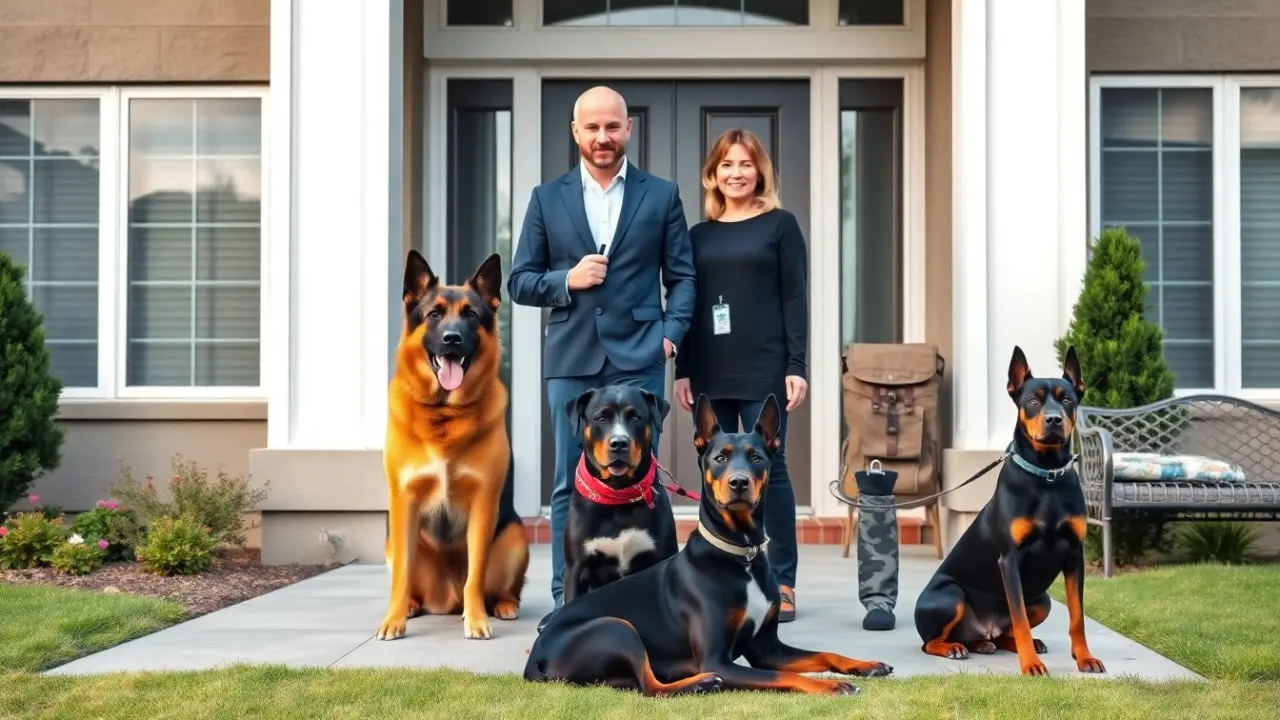
German Shepherds rank high for protection and versatility. German Shepherds show intelligence, trainability, and steady courage. German Shepherds fit active families, handlers who train consistently, and homes that give space to move. They often excel in obedience, tracking, and as working partners when given regular mental challenges.
Rottweilers offer strength and loyalty. Rottweilers guard property and family with quiet confidence. Rottweilers fit experienced owners who enforce rules and deliver firm, fair training. They benefit from early socialization around different people and situations to temper suspicion with appropriate confidence.
Doberman Pinschers bring speed and alertness. Doberman Pinschers react quickly and form tight bonds. Doberman Pinschers fit owners who provide consistent leadership and daily exercise. Their lean build and high drive make them best for families that can meet both physical and mental stimulation needs.
Bullmastiffs combine size with a calm manner. Bullmastiffs block intruders without high energy. Bullmastiffs fit families that want a steady guardian and moderate activity. Their low-to-moderate exercise needs make them approachable for owners seeking a less demanding large guardian breed.
Belgian Malinois suit handlers who train regularly. Belgian Malinois demand mental and physical work. Belgian Malinois fit active homes and professional roles like search or protection. Without jobs or outlets they can become frustrated, so they are best for experienced owners or working environments.
Akitas show quiet loyalty and selective friendliness. Akitas prefer clear leadership and may take time to warm to visitors. Akitas fit adults or families with older children and patient socialization. They can be aloof with strangers yet deeply devoted to their household.
Boxers protect with alert playfulness and stamina. Boxers bond tightly with children and remain watchful. Boxers fit energetic families that supervise kids and give daily play. Their protective instincts are often paired with a buoyant temperament that responds well to positive training.
Each breed brings risks and rewards. Each breed needs early socialization, consistent rules, and training focused on control and recall. Each breed benefits from positive reinforcement and clear boundaries. Each breed requires medical care, appropriate diet, and safe outlets for energy. Mixed-breed dogs can also be excellent protectors while sometimes having fewer extreme tendencies, so consider temperament over pedigree alone.
When comparing breeds, consider typical health concerns, lifespan, grooming demands, and noise level. A breed that fits your work schedule and living situation will be more manageable long-term. Also consider housing rules, local regulations, and insurance implications for certain breeds, as these practicalities influence whether a protective breed will be a good fit.
How To Choose, Train, And Safely Live With A Protective Dog
Choose a breed that matches family life and experience. Choose a breed with activity needs the family can meet. Choose a breed with a temperament that suits children, seniors, or other pets. Consider whether a puppy, adolescent, or adult dog best meets your capacity for training and socialization time.
Evaluate individual dogs with behavior tests and foster trials. Evaluate how a dog greets visitors, tolerates handling, and reacts to sudden sounds. Evaluate energy level by taking short walks and watching reactions. Foster trials, meet-and-greets with household members, and time with other dogs give clearer insight than a single visit.
Train early and train often. Train puppies and adults with clear cues, short sessions, and consistent rewards. Train for sit, stay, recall, and quiet. Train people to use the same rules and the same cues. Add advanced obedience, impulse control exercises, and proofing in distracting environments so skills generalize to real-life scenarios.
Socialize the dog to people and settings. Socialize dogs to visitors, children, and other animals in controlled steps. Socialize with positive experiences and calm handling. Socialize with supervised play and rewards. Gradual exposure helps a protective dog learn to accept strangers who pose no threat while remaining alert to genuine danger.
Set boundaries in the home. Set rules for furniture, doors, and visitor greetings. Set limits on guarding behaviors like excessive barking and blocking exits. Set safe spaces where the dog can rest away from guests. Consistent household rules taught to everyone in the family reduce mixed messages and help the dog understand expectations.
Use management tools when needed. Use leashes, secure fencing, and gates to prevent unwanted access. Use crates for short periods and safe timeout. Use professional help for strong guarding responses. Management is not a substitute for training but can prevent incidents while training progresses.
Work with a professional trainer or behaviorist. Work with someone who uses positive reinforcement and clear leadership. Work with a pro when aggression appears or when handlers feel unsure. A qualified trainer can design a plan for threshold training, desensitization, and safe greeting protocols tailored to your dog.
Plan for long-term care. Plan for regular vet checks, joint support for large breeds, and weight control. Plan for mental work like puzzle toys, scent games, and obedience practice. Plan for family changes and how they will affect the dog. Preventative health care and an enriched routine reduce stress and keep protective instincts focused and appropriate.
Practical safety tips for everyday life: teach a reliable recall and a “place” command so the dog moves off a doorway or greeting spot; practice calm greetings with invited visitors; keep identification and up-to-date vaccinations; and have a clear emergency plan if a dog becomes injured or highly stressed. Consider insurance or liability protection where appropriate and know local laws regarding tethering, noise, and dangerous-dog ordinances.
A protective dog can add safety and companionship. A protective dog requires consistent care, clear rules, and ongoing training. A protective dog improves life when handlers match breed traits to family needs. With the right match, training, and long-term commitment, protective dog breeds become reliable partners who protect while remaining loving members of the household.