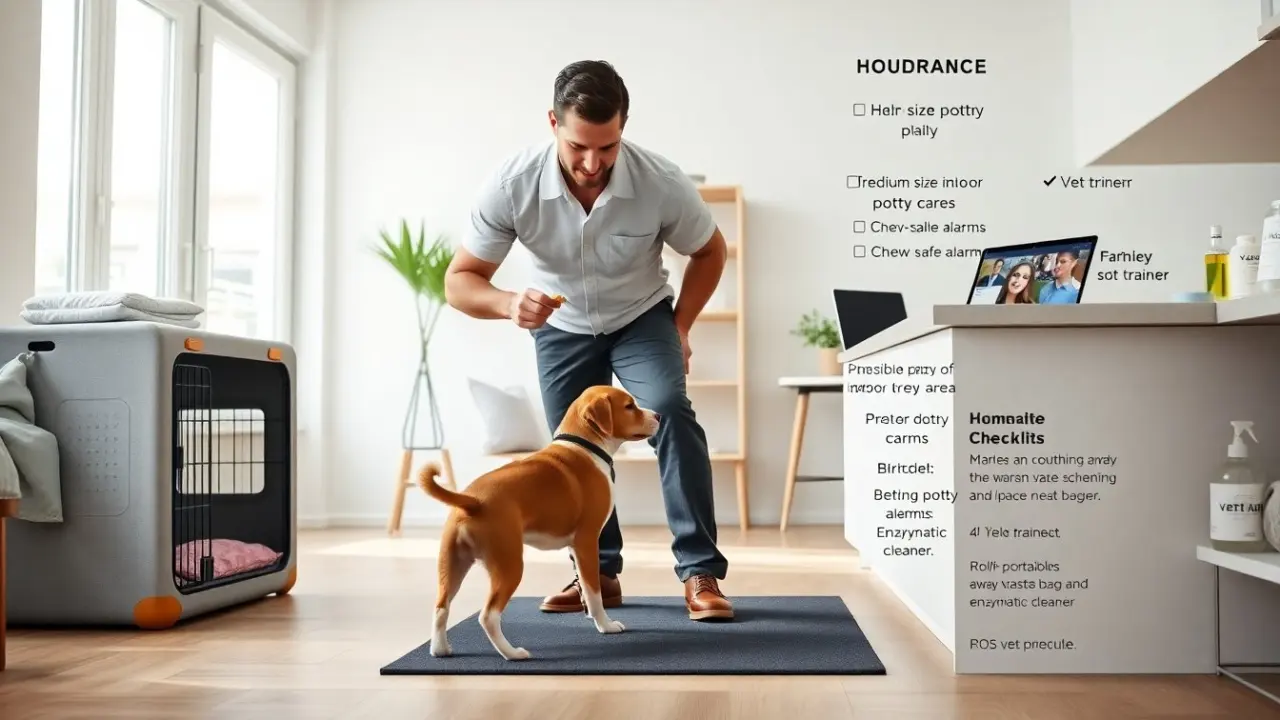
Potty training puppy tips help owners get consistent results fast. The guide lists clear steps, simple tools, and a daily plan. It sets expectations for when puppies will learn. It shows how to avoid common setbacks and when to call a vet or trainer. The tone stays practical and direct so owners can start right away.
Key Takeaways
- Potty training puppy tips emphasize understanding a puppy’s development stages to set realistic housebreaking goals.
- Prepare a designated potty area and consistent daily schedule to reinforce training signals for your puppy.
- Use crate training with positive reinforcement to teach bladder control and minimize accidents.
- Avoid punishing accidents; instead, clean thoroughly and maintain consistency in potty location and routine.
- Monitor sudden changes in potty habits as potential health issues and seek veterinary advice promptly.
- If training plateaus after several weeks, consult a certified trainer to improve techniques and resolve challenges.
Understand Puppy Development And Housebreaking Timelines
Puppies learn control in stages. At two to four weeks they have no bladder control. At eight to twelve weeks they begin basic control. By four to six months many puppies hold for several hours. Small breeds may need more frequent breaks than large breeds. Owners should note breed, age, and health when they set goals. Expect accidents during teething and growth changes. Record successful potty trips and accidents to spot patterns. A clear timeline prevents frustration and keeps training realistic.
Prepare Supplies, A Reliable Schedule, And A Designated Potty Area
Owners need a short checklist before they start. They should buy a crate, chew-safe toys, treats, waste bags, and a washable mat. They should pick one outdoor or indoor spot for potty use. They should place that spot away from high traffic and food. They should plan a simple daily schedule for meals, play, and potty breaks. They should set alarms for early morning, after meals, after naps, and before bed. A consistent place and schedule make signals clear to the puppy.
Step-By-Step Training Routine: Crate, Schedule, Potty Cue
Start with short crate periods and short teaching sessions. Use the schedule as the backbone of training. Use one simple cue word for potty time. Reward the puppy immediately after success. Increase time between breaks slowly. Reduce treats once the puppy gains consistency and praise remains. Keep sessions short and positive. Track progress each week and adapt the schedule for age and weather. Follow the substeps below for detail.
Using Crate Training Effectively
Choose a crate that fits the puppy with room to stand and turn. Make the crate a safe space with a soft pad and a toy. Put the puppy in the crate after meals and after play. Let the puppy out for supervised potty breaks on the schedule. Do not use the crate for long punishment periods. Gradually extend crate time by thirty to sixty minutes as the puppy shows success. Crate training helps the puppy learn bladder control and reduces accidents when the owner is away.
Common Mistakes And How To Fix Them Quickly
Owners often punish accidents instead of cleaning and moving on. Punishment scares the puppy and hides progress. Owners often change the potty area too soon. Changing the spot confuses the puppy. Owners often skip night or nap checks too early. Skipping checks creates accidents. To fix these problems, clean accidents with an enzymatic cleaner, return to the original spot, and re-establish the schedule. If the puppy has repeated accidents in the same place, restrict access and supervise until the puppy relearns the rule.
When To Seek Help: Health Issues And Trainer Support
If accidents start suddenly, the puppy may have a urinary tract infection, parasites, or a digestive problem. Owners should consult a veterinarian when accidents are frequent, when the puppy strains, or when blood appears. If health checks are clear but progress stalls after four to six weeks, owners should hire a certified trainer for behavior assessment. Trainers can demonstrate timing, cue use, and reinforcement. A vet and a trainer together speed recovery and clear stubborn patterns.