A pet proof screen door prevents pets from tearing screens and escaping. This guide explains why standard doors fail, which materials work best, and how to fit screens. It gives clear steps for owners who want a long-lasting screen that keeps pets safe and homes secure.
Key Takeaways
- A pet proof screen door uses durable materials like stainless steel or heavy-duty polyester mesh to resist claws and impact from pets.
- Reinforced frames and hardware, including heavy-duty hinges and pet-proof kick plates, enhance door strength and longevity.
- Proper installation involves securing frames with long screws, sealing to prevent moisture, and stretching mesh tightly to avoid sagging.
- Regular maintenance such as monthly inspections, cleaning, and timely repairs prolongs the life of pet proof screen doors.
- Training pets to use doors calmly and providing scratching alternatives helps reduce screen damage and repair costs.
- Owners should plan to replace screens every 5–10 years, especially when frames warp or meshes show multiple holes, to keep pets safe and homes secure.
Why Standard Screen Doors Don’t Hold Up To Pets
Standard screen doors use thin fiberglass or aluminum mesh. The mesh resists bugs and lets air through. Pets test the mesh with claws, teeth, and body weight. Cats claw at screens to get outside. Dogs jump or push screens during play or when they get excited. The frames use light materials that bend or break under pressure. Hinges and latches on standard doors use small screws and thin plates. Pets pull on those parts and loosen them over time. Standard doors also sit low to the floor. Pets reach the weak lower section first. Repair patches use the same thin mesh. Repairs hence fail quickly. Weather shortens the life of standard screens. Sun fades and weakens the fibers. Rain and humidity make frames warp. Owners often place plants or furniture near the screen. Pets use those items as launch points. In short, standard screen doors perform well for people who do not have pets. They do not hold up when pets test them daily. The pattern repeats in many homes. Owners who want longer service must choose different materials and stronger hardware.
Practical Pet-Proofing Solutions: Materials, Hardware, And Installation Tips
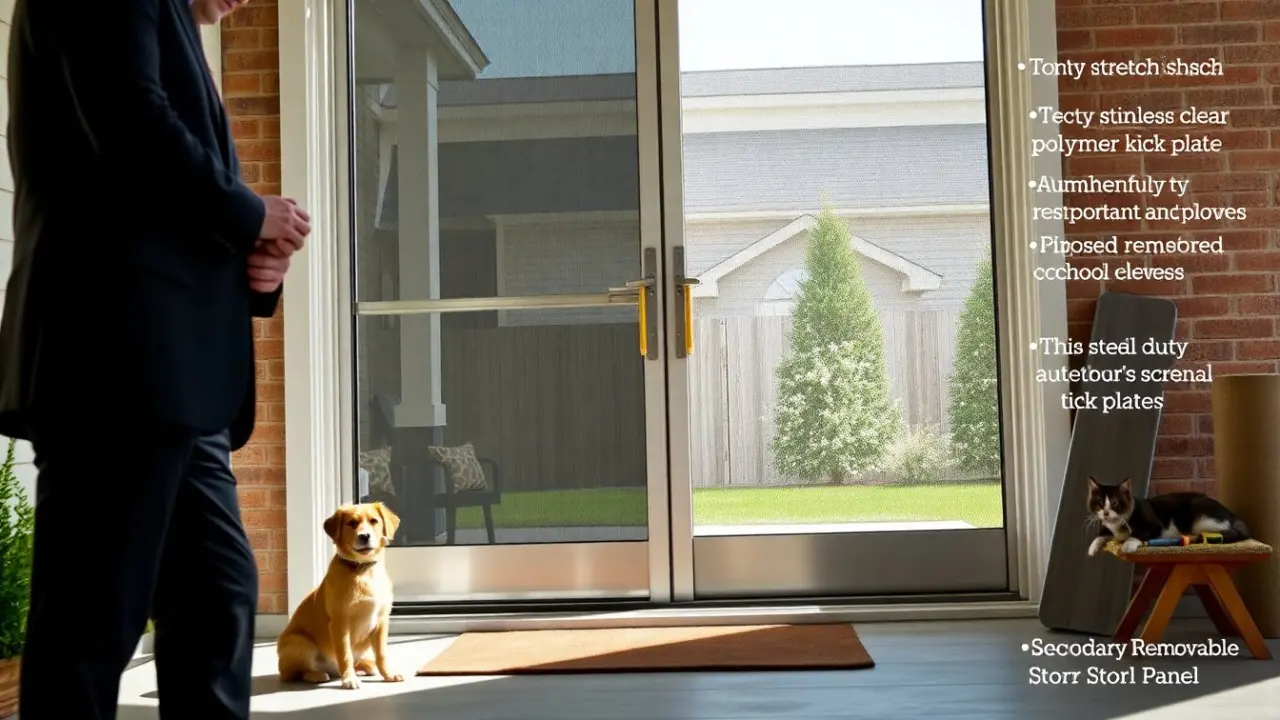
Owners can replace mesh with pet-resistant options. Stainless steel mesh resists claws and stays rigid. Heavy-duty polyester mesh provides flexibility and good visibility. Vinyl-coated wire mesh combines strength and rust resistance. Owners should choose thicker frame profiles. Aluminum frames with reinforced corners resist bending. Solid wood frames suit doors that need a sturdy look and extra strength. Hardware matters. Use heavy-duty hinges with long screws that anchor into studs or a reinforced header. Add a latch that locks from both sides. Install a pet-proof kick plate at the bottom of the door. A metal kick plate protects the lower section from pushes and scratches. Owners can fit a clear polymer guard over the lower third of the screen. The guard hides wear and spreads impact force. When installing, they should remove the old frame carefully. They should square the opening and check sill level. Install the new frame with long exterior screws and use sealant to keep moisture out. Stretch the mesh tight to avoid sagging. Trim excess mesh and tuck it into a spline groove. Test the door with a staged push and with the pet nearby. Owners can add a secondary barrier like a screen insert or a removable storm panel when the pet expects to bolt. For rental properties, use a reinforced screen that fits inside the existing frame so the owner avoids full replacement.
Maintenance, Training, And When To Replace Your Screen Door
Owners must maintain pet-proof screens to extend life. They should inspect screens once a month. They should look for small tears, loose spline, and warped frames. They should clean mesh with a soft brush and mild soap. They should rinse and dry the mesh to avoid mold. Hinges and latches need oil twice a year. They should tighten screws when they loosen. For small tears, owners should use a repair kit that matches the mesh material. For larger damage, they should replace the panel rather than patching repeatedly. Owners should train pets to use the door calmly. They should teach a sit-and-wait cue before the door opens. They should reward the pet for calm behavior. For dogs that jump, owners should teach a nose-target cue on a mat. For cats that claw, owners should provide vertical scratching options near the door. Training reduces stress on the screen and lowers repair costs. Owners should replace the screen door when frame warping prevents proper sealing. They should also replace the door when mesh shows multiple holes that reduce strength. If hardware corrodes or hinges fail, the owner should act quickly. A failing door can let pets escape or let pests into the home. Finally, owners should budget for replacement every five to ten years depending on material and use. Choosing stronger materials and keeping a simple maintenance routine will extend the time between replacements.