Pet proof flooring helps owners keep homes clean and damage-free. This expanded guide explains common materials, realistic cost ranges, installation considerations, and simple ongoing care tips so readers can choose durable floors that match their household’s needs. It shows how to pick floors that resist scratches, stains, and odor while balancing comfort and style. The guidance compares options, lists specific product features to look for, and outlines a practical maintenance plan so pet proof flooring performs well through everyday wear and occasional accidents.
Key Takeaways
- Pet proof flooring must resist scratches, moisture, stains, and odors while providing safe traction and easy cleaning.
- Vinyl plank is a popular pet proof flooring option due to its water and scratch resistance; look for a thick wear layer and full-spread adhesive or locking systems for long life.
- Laminate offers a convincing wood look and scratch resistance but can swell with standing water; choose products with water-resistant cores and quality underlayment.
- Porcelain tile and sealed concrete are durable and stain-resistant; grout and seams need attention to prevent moisture issues and odors.
- Area rugs and mats placed in high-traffic zones add comfort and protect floors — choose washable, low-pile rugs and secure them to prevent slips.
- Regular pet nail trimming, quick spill cleanup with pH-neutral cleaners, and a routine vacuum/mop schedule preserve appearance and performance.
- Proper installation (subfloor prep, acclimation, movement gaps, and appropriate adhesives/underlayment) plus protective strategies (furniture pads, rugs, retraining pets) extend flooring life.
What Makes Flooring Pet-Friendly?
Truly pet proof flooring combines four core characteristics: scratch resistance, water resistance, stain resistance, and surface traction. Scratch resistance limits visible claw marks; look for explicit wear-layer thickness or abrasion ratings from the manufacturer. Water resistance prevents cupping, swelling, and odor when accidents happen — full waterproof construction or properly sealed surfaces are ideal. Stain resistance means spills and pet messes won’t permanently discolor the surface; sealed grout, nonporous tiles, and coated planks perform best. Traction reduces slips for both animals and people — textured finishes and low-gloss surfaces often work better than highly polished floors. Beyond those four, durable edges and well-fitted transitions reduce places where hair and grime collect, and a surface that dries quickly after cleaning helps control odor and bacterial growth. Finally, consider comfort: floors that are too hard or cold may be unpleasant for older pets or those with joint issues, so plan for rugs or heated areas where needed.
Best Flooring Options For Pets
Vinyl plank and luxury vinyl tile (LVT): Many homeowners choose vinyl plank for pet proof flooring because modern vinyl combines waterproof cores with realistic wood and stone visuals. When shopping, prioritize a thicker wear layer (for example, 20 mil or higher in higher-traffic homes), a textured surface for grip, and a warranty that covers pet-related wear. Vinyl can dent from very heavy nails or furniture, so use furniture pads and consider higher-density cores where available.
Laminate: Laminate can deliver a convincing wood look and strong scratch resistance at a lower cost, especially with high AC (abrasion class) ratings. For pet homes, select products labeled water-resistant or with a sealed edge system; install a quality underlayment to reduce hollow sound and to add slight cushioning. Avoid basic laminate in areas with frequent moisture unless you install water barriers and swift cleanup protocols.
Porcelain tile and natural stone: Porcelain tile is a top choice where mud, water, and heavy traffic are constant factors — it resists stains, scratching, and is easy to disinfect. Choose textured tiles for slip resistance, and specify grout that’s sealed or epoxy-based to prevent odor and staining where accidents occur. Natural stone can be durable but usually needs sealing and more careful maintenance to stay pet friendly.
Sealed concrete: Sealed concrete and microcement floors are extremely durable and waterproof when properly finished. They’re ideal in mudrooms, basements, and modern open-plan spaces. Concrete can be cold and hard underfoot; add area rugs and padding for pet comfort and use a breathable sealer to reduce the frequency of recoat needs.
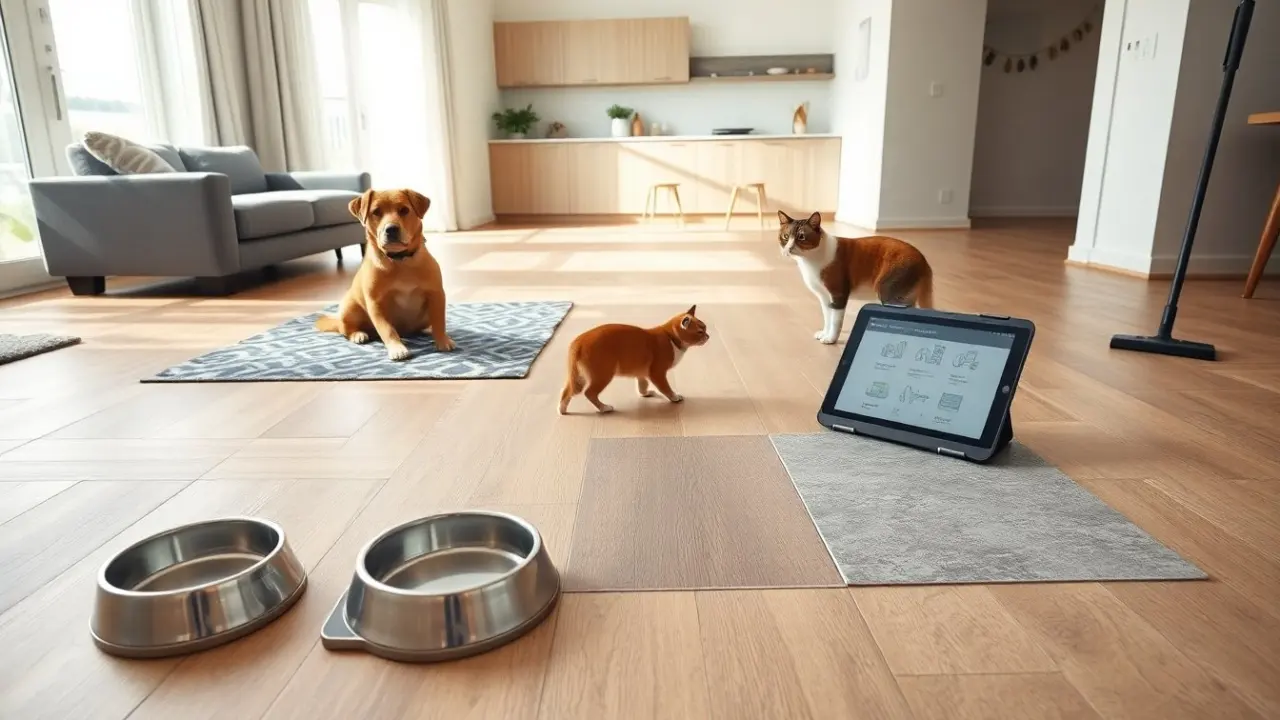
Area rugs and runners: Layering washable, low-pile rugs over hard floors adds warmth and protects high-traffic paths. Mats under feeding stations and litter areas catch spills and reduce direct contact with the floor. Choose rugs with non-slip backing or add rug pads to prevent movement and tripping.
Other specialty options: Engineered hardwood with strong surface coatings can work in low-moisture pet homes if you accept some risk of scratches; cork and rubber flooring offer forgiving surfaces with natural antimicrobial properties but check for chew-resistance and colorfastness in sunlight.
Pros, Cons, And Typical Costs
Vinyl plank pros: water resistance, ease of cleaning, wide style range, and generally good scratch resistance when outfitted with a durable wear layer. Cons: can dent under point loads (heavy claws or furniture), and lower-end products fade faster. Typical cost: $2 to $5 per square foot for materials; installation varies by method and site prep, commonly $2 to $4 per square foot.
Laminate pros: strong scratch resistance, realistic wood visuals, and quick installation. Cons: can swell with standing water if not water-resistant; may require better underlayment for sound and feel. Typical cost: $1 to $3 per square foot for materials; installation commonly $1.50 to $3 per square foot depending on complexity.
Porcelain tile pros: extremely durable, scratch- and stain-resistant, and available in many textures for traction. Cons: cold and hard, grout lines need sealing to prevent odor or stains, and installation is labor-intensive. Typical cost: $3 to $10 per square foot for materials; installation $5 to $15 per square foot depending on tile size and layout.
Sealed concrete pros: long lifespan, highly customizable finishes, and easy to clean. Cons: feels hard and can be cold; may require periodic resealing and professional polishing to maintain look. Typical cost: $2 to $6 per square foot for staining and sealing, with higher costs for decorative overlays.
Area rug use and care: Rugs add traction and comfort but collect hair and dander. Choose rugs that are machine-washable or easy to shampoo. Low-pile, tightly woven rugs shed less and slide less, reducing tripping hazards and concentrated wear.
Installation, Maintenance, And Damage Prevention
Pre-installation and preparation: Proper subfloor prep is critical for any pet proof flooring. Level and clean the subfloor, repair moisture issues, and allow new materials to acclimate in the room for the time the manufacturer recommends (commonly 48 hours). Install appropriate underlayment for sound control and moisture barriers where required. Use transition strips at doorways and undercut door casings to prevent gaps where hair and debris can collect. For tiles, use a thin-set and grout recommended for wet areas and seal grout where necessary.
Routine maintenance: Establish a weekly cleaning routine based on your home’s traffic — daily sweep or spot-vacuum in high-traffic zones, and full vacuuming at least weekly with a pet-hair-capable vacuum. Mop hard floors with a pH-neutral cleaner and follow manufacturer guidance; avoid oil-based soaps or ammonia cleaners that can break down surface finishes. For quick accident management, blot liquids first with a paper towel or cloth, clean with a mild enzymatic or pH-neutral cleaner designed for pets, rinse if instructed, then dry thoroughly to prevent moisture from wicking into seams or grout.
Damage prevention and small repairs: Trim pet nails every 2–6 weeks depending on growth to reduce scratch severity; keep paws clean to avoid grit-driven abrasion. Use protective pads under heavy furniture and avoid sharp-edged metal bowls directly on the floor. For scratches and small dents, follow manufacturer repair guidance — many vinyl and laminate systems have repair kits or planks that can be replaced individually. Reseal porous surfaces and grout on the schedule recommended by the product manufacturer to maintain stain resistance.
Practical layout and lifestyle tips: Place absorbent mats by entry points and under food/water stations. Rotate rugs and flip pads seasonally to distribute wear. Consider zoning rooms by floor type — tile or sealed concrete near exterior doors or in mudrooms, and more forgiving vinyl or rugs in living areas. Control sunlight with blinds or UV film to reduce fading, and keep bedding and toys clean to limit grime buildup. Schedule quarterly inspections for high-traffic areas so you can repair or replace small sections before damage spreads.
Buying checklist for pet proof flooring: verify waterproof/water-resistant claims, check wear-layer thickness or abrasion rating, ask about warranty coverage for pet damage, confirm recommended cleaners, and request installation details for transitions, underlayment, and moisture barriers. Factor in long-term maintenance costs (re-sealing grout, replacing rugs, refinishing options) when comparing up-front prices. With the right product choice, careful installation, and a proactive cleaning plan, pet proof flooring can combine durability and comfort for both pets and people.