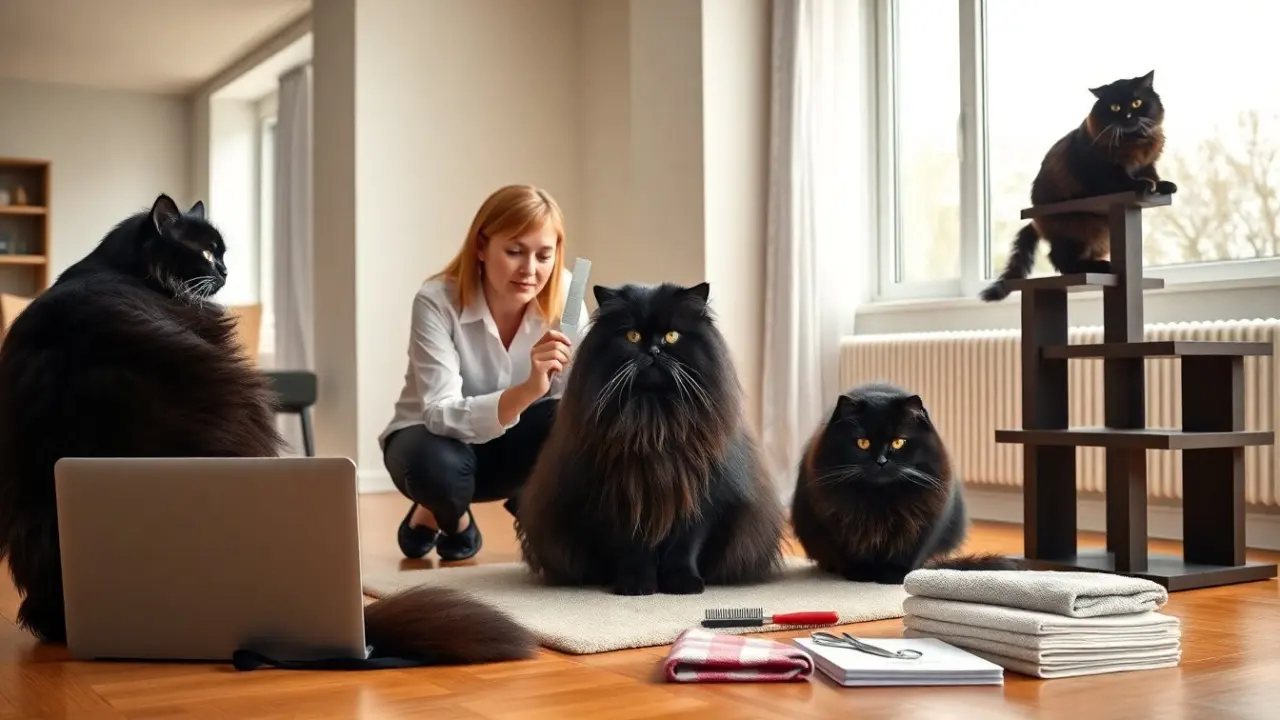
long haired black cat breeds appeal to people who want dramatic looks and calm temperaments. This guide lists popular long haired black cat breeds and explains care needs. It helps readers pick a cat that fits their home and routine. The article uses clear facts and simple advice to guide decisions about ownership and daily care.
Key Takeaways
- Long haired black cat breeds offer striking looks and diverse temperaments, making them suitable for various homes and lifestyles.
- Maine Coons are large, affectionate cats needing weekly grooming and regular health checks for heart and hip conditions.
- Persian cats require daily grooming and frequent veterinary care, rewarding owners with calm and gentle companionship.
- Norwegian Forest and Siberian cats thrive in active homes, need regular brushing to manage their dense coats, and enjoy climbing and play.
- Consistent grooming, including brushing and occasional baths, is essential to maintain the health and gloss of long haired black cat coats.
- Feeding high-quality, protein-rich food and scheduling routine vet visits support the health, coat quality, and longevity of these breeds.
Why Choose A Long-Haired Black Cat? Personality, Looks, And Suitability
Many people choose long haired black cat breeds for their striking appearance and soft coats. These cats offer plush fur and a sleek silhouette. They often show calm or playful personalities depending on the breed. Families may prefer gentle types like Maine Coon or Persian. Apartment dwellers may favor quieter, lower-energy variants. Owners should match a cat’s energy to their schedule. Allergies and grooming willingness also affect suitability. Prospective owners should meet individual cats to judge temperament. The term long haired black cat breeds covers many types with different care needs and temperaments.
Maine Coon — The Gentle Giant With A Luxurious Black Coat
The Maine Coon ranks among long haired black cat breeds for size and friendliness. It shows a large frame, tufted ears, and a flowing tail. The breed tends to act social and tolerant with children and other pets. Owners report playful behavior and steady affection. The Maine Coon sheds seasonally and needs weekly brushing to prevent tangles. It benefits from interactive play to manage weight. Veterinary checks should focus on hip and heart health. Breeders often screen for hypertrophic cardiomyopathy and hip dysplasia. The Maine Coon fits homes that can handle a big, affectionate cat.
Persian (And Himalayan Variants) — Classic, Plush Black Long Hair
The Persian appears often among long haired black cat breeds for its round face and dense coat. The Himalayan variant shows Persian looks with color-point markings. These cats display calm, low-energy temperaments. They prefer quiet spaces and gentle handling. The Persian requires daily grooming to avoid mats and skin issues. Eyes may need regular cleaning to prevent stains and infection. Owners should expect frequent veterinary visits for dental and respiratory checks. The breed adapts well to indoor living and to owners who can commit to steady grooming. Persian cats reward care with calm companionship.
Norwegian Forest Cat And Siberian — Hardy, Fluffy Black Companions
The Norwegian Forest Cat and the Siberian rank among long haired black cat breeds for their dense, water-resistant coats. Both breeds evolved for cold climates. They show athleticism, agility, and a love of climbing. Owners note loyal and balanced temperaments that suit active households. These cats shed more in spring and need regular brushing to manage undercoat. Both breeds tend to have fewer hereditary issues than some purebreds. Breeders often test for genetic conditions like progressive retinal atrophy. These cats fit homes that offer vertical space and play opportunities.
Caring For Long-Haired Black Cats: Daily Needs And Long-Term Care
Owners must plan for grooming, nutrition, and routine health checks when they adopt long haired black cat breeds. They should establish a daily brushing habit to keep coats tidy. Owners should provide balanced food to support skin and coat health. Regular veterinary exams catch issues early. Indoor living reduces exposure to parasites and injury. Owners should allocate time for play and mental stimulation to prevent boredom. They should inspect coats weekly for mats, skin irritation, or fleas. Long-term care includes dental cleanings, vaccinations, and weight monitoring to maintain overall health.
Grooming Routine: Brushing, Bathing, And Tackling Mats
Owners should brush long haired black cat breeds daily or every other day. Brushing removes loose hair and lowers hairball risk. Use a wide-tooth comb for tangles and a slicker brush for the topcoat. Baths should occur only when needed, using cat-formulated shampoo. Mats require gentle work with a comb: avoid cutting unless a vet or groomer handles the job. Owners may book a professional groomer for seasonal shedding. Nail trims and ear checks should join the routine. Consistent grooming helps keep black coats glossy and healthy.
Health, Diet, And Common Genetic Considerations For Long-Haired Breeds
Owners should feed high-quality food to support skin, coat, and muscle. Protein-rich diets help maintain a glossy black coat in long haired black cat breeds. Hydration reduces urinary and skin issues. Breeders often test for breed-specific genetic conditions such as hypertrophic cardiomyopathy in Maine Coons and ocular issues in Persians. Regular dental care reduces periodontal disease. Vaccinations and parasite prevention provide baseline protection. Owners should monitor weight and activity to spot early problems. Timely vet visits and genetic screening improve long-term outcomes for these breeds.