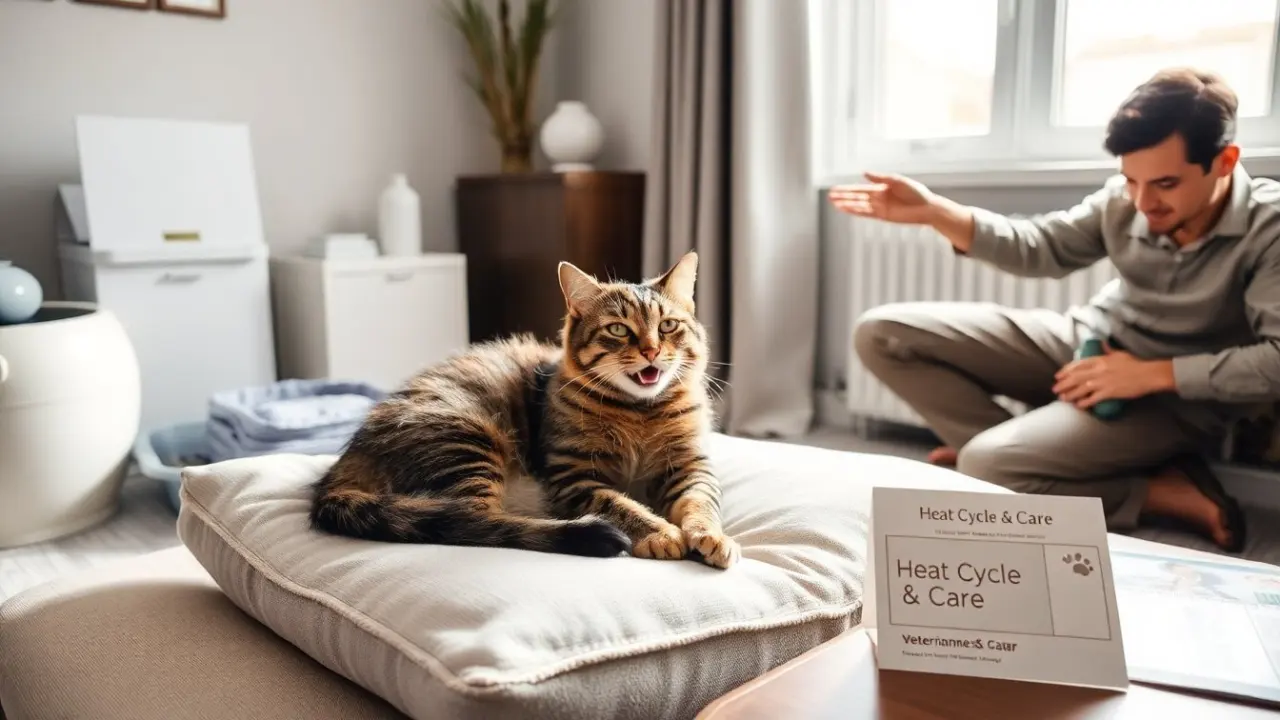
The guide explains cat in heat behavior and what owners can expect. It describes clear signs, timing, and basic care. It uses simple language and direct advice. The aim is to help owners spot heat, reduce stress, and decide when to get veterinary help. The guide stays factual and practical for everyday care.
Key Takeaways
- Cat in heat behavior is driven by hormonal changes that trigger physical and vocal signs, helping owners recognize estrus clearly.
- Common behaviors include loud yowling, increased affection, and restlessness, often disturbing household routines during the 3-7 day cycle.
- Heat cycles can repeat every 2-3 weeks, especially in indoor cats exposed to consistent lighting, so tracking cycles aids in managing care.
- Providing quiet spaces, interactive play, and pheromone diffusers can comfort a cat in heat and reduce stress for both cat and owner.
- Owners should seek veterinary help if the cat shows signs of illness, injury, or heavy bleeding, and consider spaying to end heat behaviors and lower health risks.
What “In Heat” Means: The Biology Behind Estrus
A cat in heat behavior starts with hormonal change. The ovary releases hormones that make the female receptive to mating. The hypothalamus and pituitary gland trigger luteinizing hormone and estrogen. Estrogen rises and causes the physical signs of estrus. The reproductive tract prepares for fertilization. Unspayed females enter regular cycles from about five months of age. Indoor cats can cycle all year. Males sense these hormones and change their behavior. Understanding this biology helps owners read the signs and act with calm.
Common Behavioral Signs Of A Cat In Heat
Cats show clear behaviors when they enter estrus. These behaviors help owners identify a cat in heat behavior. The two main groups of signs are vocal and physical. Owners should watch for both types. The list below covers common, repeatable actions.
• Vocalization, Affection, And Restlessness
A cat in heat behavior often includes loud yowling and moaning. The cat calls more at dawn and dusk. The cat seeks extra attention from people. She may roll on the floor and rub against furniture. The cat paces and shows restless movement. She may sleep less and act more alert. These signs aim to attract mates. They can disturb household routines. Owners can expect mood shifts that last several days.
How Long Heat Lasts And What Triggers Cycles
A normal estrus lasts about three to seven days. If the cat does not mate, she may repeat cycles every two to three weeks. Length varies by age, breed, and season. Longer daylight tends to increase cycle frequency. Indoor light can remove seasonal limits and cause year-round cycles. Stress and illness can alter cycle timing. Pregnancy or pseudopregnancy will stop cycles for weeks to months. Tracking cycles helps owners predict the next heat and plan care or spaying.
Practical Ways To Comfort And Manage A Cat In Heat
Owners can ease cat in heat behavior with low-effort steps. Provide quiet and private spaces. Offer soft bedding and a warm spot to rest. Play with gentle toys to redirect energy. Use pheromone diffusers to lower arousal for some cats. Keep litter boxes clean and fresh. Limit outdoor access to prevent mating and injury. Avoid letting the cat near intact males. Use cling-free collars and window locks to block escape routes. If behavior becomes hard to handle, consult a veterinarian for options.
When To Seek Veterinary Help And The Case For Spaying
Owners should call a vet when signs include fever, bleeding, or sudden lethargy. Seek help for wounds after fights or for repeated cycles that cause weight loss. A vet can check for infections and pregnancy. Spaying ends cat in heat behavior by removing the ovaries and uterus. Spaying reduces unwanted litters and lowers cancer and infection risks. It also reduces roaming and fighting in many cats. Owners should discuss timing and costs with their clinic. Vets will outline benefits and recovery steps before scheduling surgery.