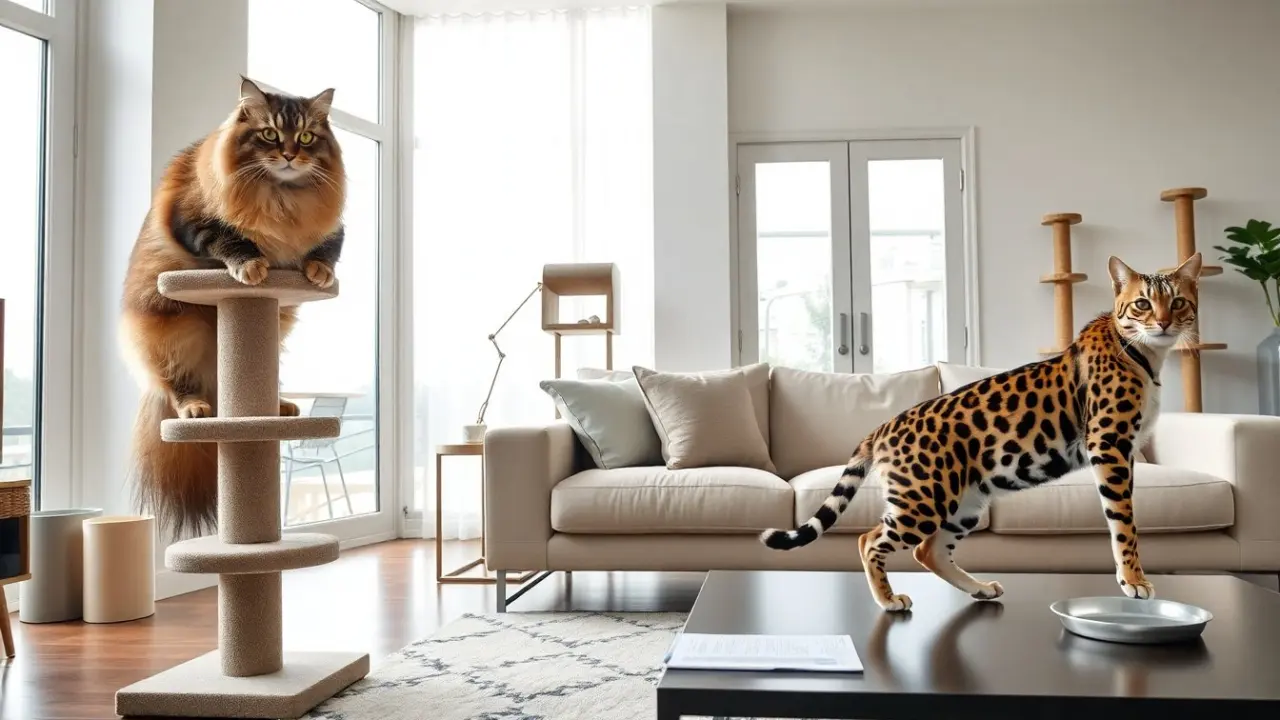
Big cat pet breeds refer to larger domestic and hybrid cats that people keep as pets. This article expands on what the term means, gives practical comparisons of commonly kept large domestic and hybrid types, and lays out detailed care, legal, and sourcing considerations. Readers will find clear criteria for size, behavior, and safety, plus actionable guidance on housing, feeding, enrichment, veterinary needs, and how to evaluate breeders or adoption options when considering big cat pet breeds.
Key Takeaways
- Big cat pet breeds include large domestic and hybrid cats, commonly judged by adult body size, weight, and behavioral needs rather than a single universal cutoff.
- Popular large domestic breeds such as Maine Coons, Siberians, Norwegian Forest Cats, and Ragdolls differ in grooming needs, activity level, and suitability for family life—choose based on household routine and space.
- Hybrid breeds such as Bengals, Savannahs, and Chausies bring wild ancestry traits (high energy, prey drive, vocalization) and often face legal restrictions; they require experienced ownership and specialized enrichment.
- Proper care for big cat pet breeds involves adequate vertical and horizontal space, diet calibrated to size and activity, daily enrichment, and proactive veterinary attention for joint and weight management.
- Prospective owners must research local laws and permit requirements, screen breeders or rescues carefully, budget for higher lifetime costs, and prepare the home and family for long-term responsibility.
What Counts As A “Big Cat” Pet Breed? Definitions, Types, And Legal Distinctions
Defining a “big cat” pet breed is part objective and part practical: size measurements matter, but so do body type and behavior. Common practical criteria include adult body weight, overall length (excluding tail), and bone structure. Many owners and breeders informally use thresholds such as cats over 12 pounds or with notably larger frames to flag a cat as “big,” but individual variation is normal.
Types that fall under the big cat umbrella are:
- Large domestic breeds — bred for size and domesticated temperament (for example, long-bodied, heavy-boned cats).
- Hybrid breeds — first- or later-generation crosses between domestic cats and small wild felines that can retain wild traits.
- Exotic non-domestic species — true wild felids (not covered here) that are often subject to stricter laws and are generally unsuitable as pets.
Legal distinctions are critical. Jurisdictions treat hybrids and wild cats differently: some allow ownership of later-generation hybrids but ban first-generation crosses, others require permits, and some forbid them entirely. In addition to laws, landlords and homeowner associations may have separate rules. Before adopting, check:
- Municipal, state/provincial, and national statutes about hybrid and exotic pet ownership;
- Permit and transport requirements (some places require permits for possession or movement of hybrids);
- Insurance and liability implications—homeowner or renter policies may exclude exotic or hybrid animals.
Finally, consider ethical and welfare concerns: large-bodied and hybrid cats can have specific physical and behavioral needs. Responsible ownership means matching household capacity (space, time, finances, veterinary access) to the animal’s needs.
Top Large Domestic Cat Breeds And What Makes Them “Big”
Large domestic breeds are popular because they combine size with predictable domestic behaviors. When evaluating breeds, consider adult size range, activity level, grooming burden, typical health considerations, and temperament. The sections below summarize practical points to help compare breeds that qualify as big cat pet breeds.
Maine Coon — Size, Personality, And Living Needs
The Maine Coon often appears at the top of lists for big cat pet breeds because of its large frame, dense coat, and rugged build. Key considerations:
- Size and build: Broad chest, long body, substantial bone structure—males commonly fall into the upper ranges of the large-breed spectrum.
- Personality: Social, often dog-like in interactions; they enjoy play, attention, and may follow owners around the home.
- Grooming: Long fur benefits from regular brushing to prevent mats; seasonal shedding increases grooming needs.
- Housing and enrichment: Strong climbers that appreciate tall cat trees, broad ledges, and interactive toys to channel their play drive.
- Health and diet: Quality protein and controlled portions help maintain muscle while avoiding obesity; regular monitoring for breed-specific concerns (discussed with a veterinarian) is recommended.
Siberian And Norwegian Forest Cat — Adaptations, Grooming, And Activity Levels
Siberian and Norwegian Forest Cats are robust, with dense undercoats and strong musculature suited to colder climates—traits that contribute to their “big” classification. Practical points:
- Coat and grooming: Thick double coats require seasonal and routine brushing to manage shedding and reduce hairballs.
- Activity: Both breeds enjoy active play and often favor vertical spaces—offer tall perches and climbing structures.
- Suitability: Good for families that can provide active daily play and tolerate moderate grooming commitments.
- Nutrition: Diets higher in quality protein with appropriate caloric control support their energy level and preserve lean mass.
Ragdoll And Other Large Breeds — Temperament And Family Fit
Ragdolls and other large, placid breeds are known for their calm temperaments and suitability for households seeking a mellow companion. Consider:
- Temperament: Often very people-oriented, tolerant of handling, and generally less aggressive—good with children and other pets when socialized early.
- Activity and weight management: These breeds may be less active; structured play and portion control are important to prevent obesity.
- Grooming and comfort: Moderate grooming, comfortable sleeping areas, and accessible litter and feeding stations support their well-being.
- Family dynamics: Ideal for families that want a sociable but low-conflict companion—still requires daily interaction and mental stimulation.
Hybrid Big-Cat Breeds: Bengals, Savannahs, And Chausies — Pros, Cons, And Legality
Hybrid breeds blend domestic and wild felid genetics to varying degrees. They can be strikingly beautiful and highly active, but they come with specialized needs and legal considerations. Below is a practical breakdown for prospective owners.
Pros:
- Distinctive appearance and patterns that appeal to owners seeking an exotic look.
- High intelligence and activity—excellent for owners who want an interactive, trainable cat (they often learn tricks and enjoy fetch).
- Strong bonds with owners and high curiosity—rewarding for experienced caretakers who enjoy enrichment work.
Cons and challenges:
- High energy and prey drive—may not be suitable in homes with small pets unless carefully managed and socialized.
- Behavioral intensity—vocalization, territorial marking, and escape motivation can be higher than in many domestic breeds.
- Care complexity—these cats often require more enrichment, secure housing, and owner time than average pet cats.
Legal and sourcing considerations:
- Regulation: Ownership rules vary widely—some areas ban certain generations of hybrids, require permits, or regulate breeding and sale.
- Breeder selection: Seek breeders who document legal compliance, perform health testing appropriate to the hybrid type, and provide clear socialization and care histories.
- Adoption vs. purchase: Rescues for hybrids exist but are less common—verify the animal’s background and any legal paperwork before transfer of ownership.
- Contracts and long-term commitment: Reputable sellers often use contracts outlining rehoming clauses, care recommendations, and guarantees—read these carefully.
Practical Care For Larger And Hybrid Cats: Space, Diet, Enrichment, And Veterinary Considerations
Caring for big cat pet breeds combines standard feline care with adjustments for size and temperament. The following checklist and guidance help owners prepare a safe, healthy environment.
Space and housing:
- Vertical and horizontal space: Provide tall climbing structures, sturdy furniture, and wide resting platforms to accommodate larger body sizes.
- Secure outdoor options: If outdoor access is desired and legal, consider an enclosed “catio” or supervised, leash-trained excursions to limit escape and predator risks.
- Homeproofing: Reinforce screens, lock windows, and secure high places to prevent falls or escapes—hybrids in particular may be motivated to jump and explore.
Diet and weight management:
- Nutritional needs: Emphasize high-quality protein, appropriate fats, and controlled carbohydrates. Larger cats may benefit from diets formulated for joint support and lean muscle maintenance.
- Portion control: Use measured feeding, track body condition score rather than relying solely on weight, and adjust intake as activity levels change.
- Supplements and special diets: Only use joint supplements or special formulations under veterinary guidance—some larger breeds are prone to orthopedic issues that warrant preventive strategies.
Enrichment and behavior management:
- Daily activity: Schedule multiple short play sessions, provide puzzle feeders, and rotate toys to prevent boredom.
- Mental stimulation: Training, scent work, and interactive games reduce destructive behaviors and channel energy positively.
- Social needs: Large domestic breeds often enjoy human company; hybrids may need more structured interaction and gradual socialization to reduce stress.
Veterinary care and preventive health:
- Choose a vet experienced with larger or hybrid cats when possible; ask about prior cases, experience with behavior, and surgical/anesthetic protocols for bigger animals.
- Routine screening: Regular exams should include joint and spine assessment, dental checks, weight monitoring, and parasite prevention tailored to lifestyle.
- Genetic and breed-specific testing: For some breeds and hybrids, targeted screening (where available and recommended) can reveal inherited conditions to monitor.
- Spay/neuter and timing: Discuss optimal timing with your vet; early sterilization can influence growth patterns and behavior in some large breeds.
Practical non-medical considerations:
- Cost: Expect higher lifetime costs for food, larger carriers, more substantial furniture, and potentially specialized veterinary care.
- Transportation: Use appropriately sized carriers and ensure vehicle safety when transporting larger cats; some may be stressed by travel and need desensitization training.
- Choosing a breeder or rescue: Look for transparency about health history, socialization practices, and legal status; rescues and breed clubs can provide references and guidance.
- Family planning: Discuss long-term commitment, compatibility with children and other pets, and contingency plans if your living situation changes.
In short, “big cat” pet breeds can be wonderful companions if chosen and cared for responsibly. Matching the breed’s physical and behavioral profile to your household, preparing your home and finances, and seeking experienced veterinary and breeder resources are the most important steps prospective owners can take.